You started with 180 people on the guest list. Then you and your partner sat down together and started making honest decisions. The college friends you see once a year. The extended family who will attend out of obligation, not love. The coworkers who would come for the open bar.
One by one, the list got shorter. And somewhere in that process, something shifted. The day you were planning started to look completely different. Smaller, yes. But also more specific. More real. More yours.
That is what a micro wedding actually is. Not a budget shortcut. Not a compromise. A deliberate choice to spend your time, your money, and your emotional energy on the people and the setting that actually matter.
The question that follows is a practical one: where do you have it? Not every venue scales down gracefully. A 12,000-square-foot ballroom with 22 guests does not feel intimate. It feels like a cancellation. The right micro wedding venue has to earn its place at a small guest count, not just tolerate it.
This guide covers what micro wedding venues actually are, what separates the good ones from the forgettable ones, and why a working farm in Northeast Ohio may be the most natural setting for the kind of day you are now planning.
What Is a Micro Wedding?
A micro wedding is any celebration with 50 guests or fewer. Most couples who choose this format land between 5 and 30 people, which is where the format genuinely changes the feel of the day. Under 30 guests, something different happens. Every person in the room knows the couple. Every seat matters. The ceremony is quiet enough that you can hear someone crying in the back row without a microphone, and the dinner table fits everyone without a floor plan.
At 50 guests you are still technically in micro territory, but you are starting to need the same logistics as a traditional small wedding. The real sweet spot, the one couples consistently describe as the inflection point, is somewhere between 15 and 30.
Who typically attends a micro wedding? Immediate family, the closest friends, the people who would drop everything if you called. No obligation invites. No plus-ones for people you barely know. The guest list becomes an intentional decision rather than a social obligation.
As for timing: the day itself usually runs 4 to 8 hours, but the better micro wedding venues are designed around a full weekend. Guests arrive Friday, the wedding happens Saturday, and Sunday morning everyone is still on-site sharing coffee before heading home. The celebration does not end at 10 PM when the shuttle arrives. It extends naturally, the way a weekend with your closest people always does.
Micro Wedding vs. Elopement vs. Small Wedding: What Is the Difference?
These three terms get used interchangeably online, but they describe genuinely different things. Getting clear on the distinction before you start venue shopping saves time and frustration.
| Format | What It Actually Means |
| Elopement | Just the two of you, or 2 to 5 people. Often no formal reception. Ceremony is the focus. Can happen anywhere. |
| Micro Wedding | 5 to 50 guests. Full ceremony and reception. Intentionally small, not scaled down by necessity. |
| Small Wedding | 50 to 100 guests. Traditional structure, reduced headcount. Still requires full venue logistics. |
| Traditional Wedding | 100 or more guests. Full production. Average US spend exceeds $35,000. |
A micro wedding sits between eloping and a small traditional wedding. It has the intimacy of an elopement with the shared experience of a celebration. You get a reception, dancing, and toasts from the people who actually have something to say. What you leave behind is the second cousin you have met twice and the table of work colleagues who leave at 9 PM.
What to Look For in a Micro Wedding Venue
This is where most couples make their first mistake. They search for venues the same way they would for a traditional wedding, filtering by capacity and location, and end up touring 300-person event halls that technically accommodate 30. The space criteria for a micro wedding are fundamentally different. Here is what actually matters.
1. A Space That Works at Your Actual Guest Count
Scale is the most important factor in a micro wedding venue and the most overlooked. A room designed for 300 guests with 25 people in it does not feel intimate. It feels wrong. The right size venue for a micro wedding fills naturally at your guest count, where the room feels warm and full, not echoing and apologetic.
When you tour a venue, mentally place your actual guest list in the space. If 20 chairs look lonely in a room that could hold 200, move on. You want a venue where your group occupies the space comfortably without rattling around in it.
2. Indoor and Outdoor Flexibility
Ohio weather is unpredictable. A micro wedding with no quality indoor backup is one late afternoon storm away from a genuinely bad situation. The best micro wedding venues offer both, with an outdoor ceremony option for the ideal scenario and an indoor space that is actually beautiful, not just functional.
This matters more for micro weddings than for large events. A 200-person wedding has enough logistics that a weather pivot feels manageable. For 20 people, a clumsy rain plan ruins the mood entirely. The indoor option needs to be as good as the outdoor one, not a compromise.
3. On-Site Lodging for the Entire Party
This is the detail most couples overlook until the night of, and then it becomes the detail they wish they had prioritized from the beginning. When your 20 closest people are staying on-site, the wedding does not end at 10 PM. It transitions. The formal part concludes and the real part begins around the fire pit, on the cabin decks, by the sauna. No one drives on dark country roads after celebrating. The day becomes a weekend.
Look for venues with enough on-site lodging to house your entire micro wedding party. Cabin blocking, where the venue holds a group of units together for your event, is even better. It keeps the community intact and makes Sunday morning feel like a natural continuation of the night before.
4. Getting-Ready Spaces That Match Your Group
A bridal suite designed for 12 people when you have 4 is awkward and wasteful. A space too small for your actual party creates tension on a morning that should feel relaxed. The right getting-ready space for a micro wedding is proportional, comfortable, and genuinely private.
Look for venues where the getting-ready facilities are near the ceremony space, not a 10-minute drive across a shared campus. The morning timeline is tight enough without adding transit.
5. Vendor Flexibility That Respects Your Choices
Micro weddings often involve personal vendor choices. The officiant who has known the family for years. The photographer who shot the engagement session and already knows the couple’s dynamic. A venue that restricts every vendor category takes those choices away.
Look for venues that welcome your preferred officiant and photographer while maintaining reasonable standards for catering and bar service, which is where venue-specific requirements most often exist and usually for legitimate reasons related to insurance, kitchen familiarity, and food safety.
6. Photography Backdrops That Do Not Require Staging
Micro wedding photos carry more weight per image than traditional wedding photos do. With a smaller guest count, there are fewer moments to capture, which means each one matters more. A venue with one or two photogenic backgrounds will produce a portfolio that starts to feel repetitive. A venue with genuinely diverse natural settings gives the photographer room to work.
Look for venues where the landscape itself is interesting, where the photographer does not need to manufacture the shot but simply find it. Fields, water, trees, working farm elements, architectural details. The more varied the environment, the more varied and interesting the photos.
Why a Working Farm Is the Perfect Setting for a Micro Wedding
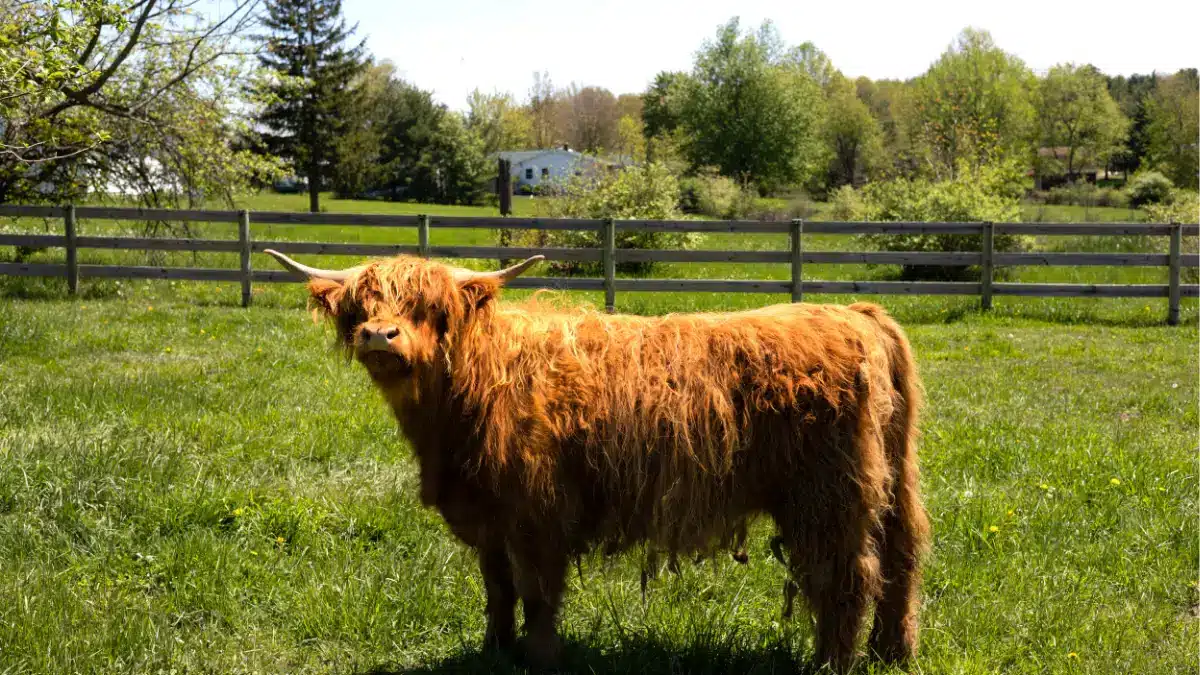
Every micro wedding venue criterion points toward the same kind of place: somewhere with natural scale, genuine character, diverse backdrops, on-site lodging, and an atmosphere that does not need to be manufactured. A working farm delivers all of it without trying.
The difference between a working farm and a venue that looks like one is the difference between a real conversation and a rehearsed speech. The details are not decorations. The honey came from bees on the property. The flowers in the arrangements were growing in a field two weeks ago. The Highland cattle grazing in the pasture are not a photo prop. They are there every morning, and they will walk up to the fence and look at your guests with genuine curiosity, and that moment, that completely unplanned encounter, will end up in more photos than the centerpieces.
A hotel ballroom gives you a room. A working farm gives you a world.
At a 200-person wedding, the venue is background. Guests are managing logistics, navigating crowds, finding their tables. At a micro wedding on 450 private acres, the farm becomes part of the celebration. Guests explore the sunflower fields. They wander down to the lake, find the orchard, and stop at the cattle pasture to ask questions. The setting creates shared experience and conversation between people who have never met, which is something no amount of carefully planned seating arrangements can replicate.
The intimacy of a micro wedding amplifies everything the farm offers. With 20 guests and 450 acres, the property feels like yours. There are no strangers, no crowd. Just the people you love and a setting that quietly makes everything more beautiful.
Micro Wedding Venues in Northeast Ohio: What Standing Rock Farms Offers
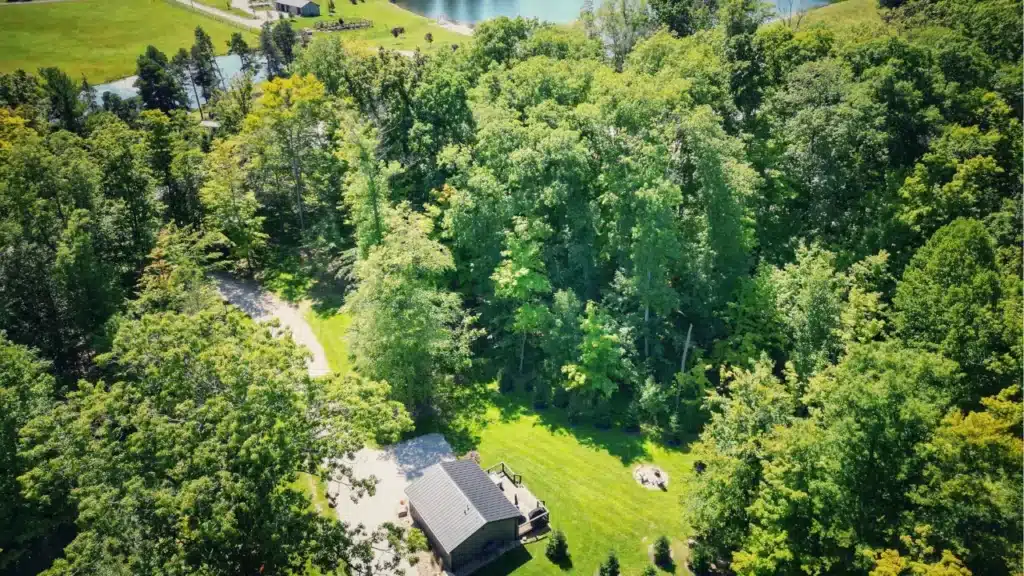
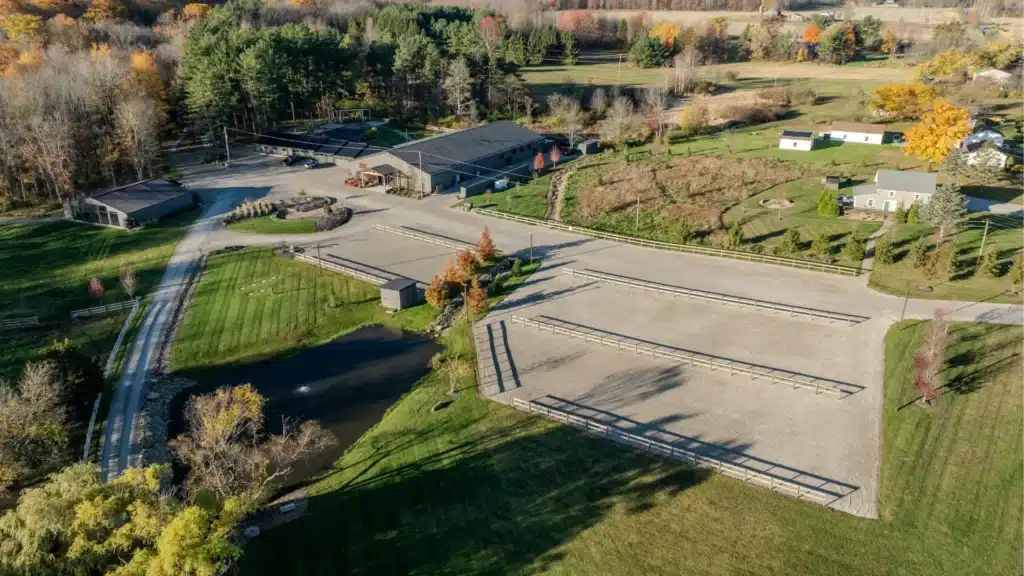
Standing Rock Farms sits on 450 acres in Madison, Ohio, in the Grand River Valley wine region of Lake County, 45 minutes east of Cleveland. The property operates as a real working farm, with Scottish Highland cattle, commercial flower fields, an apiary, an organic garden, a vineyard, an orchard, and multiple lakes across the grounds.
For micro weddings and elopements, the farm has three dedicated venue spaces, each designed for a different guest count and atmosphere.
The 1837 Barn — 5 to 30 Guests
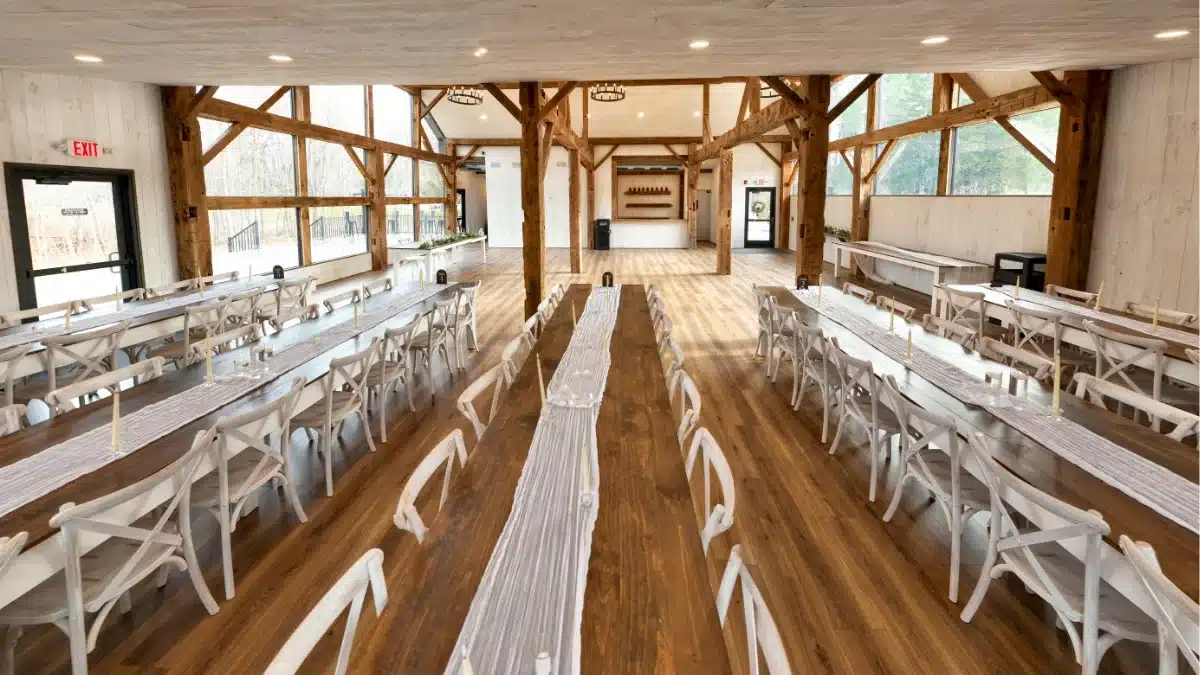
The 1837 Barn is the newest venue at Standing Rock Farms and the property’s most intimate wedding space. Originally constructed in 1837, the barn was carefully dismantled and rebuilt beam by beam on the current site, preserving the hand-hewn timbers and historic character while adding modern amenities: a dedicated caterer’s kitchen, a full-service bar with built-in coolers, climate control, oversized windows with woodland views, and handcrafted tables and chairs included with the rental.
The interior is 2,600 square feet, which at 20 to 25 guests feels generous and unhurried. The attached patio extends the space to 1,200 additional square feet of outdoor entertaining area. A 4-acre private lake borders the property.
The 1837 Barn is currently available for receptions and intimate gatherings, with ceremony options coming soon. Couples interested in hosting a full ceremony and reception at 1837 are encouraged to contact SRF directly for current availability. Getting-ready facilities for 1837 bookings are located nearby on the North Side of the property.
The Ceremony Barn — 5 to 50 Guests
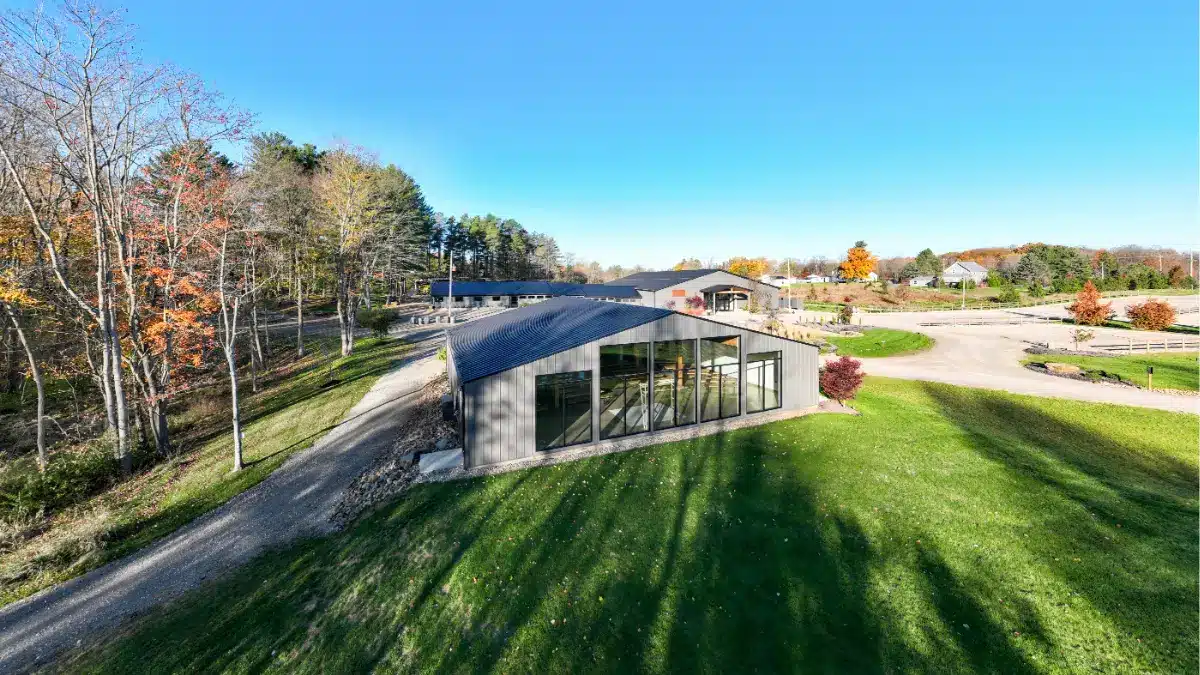
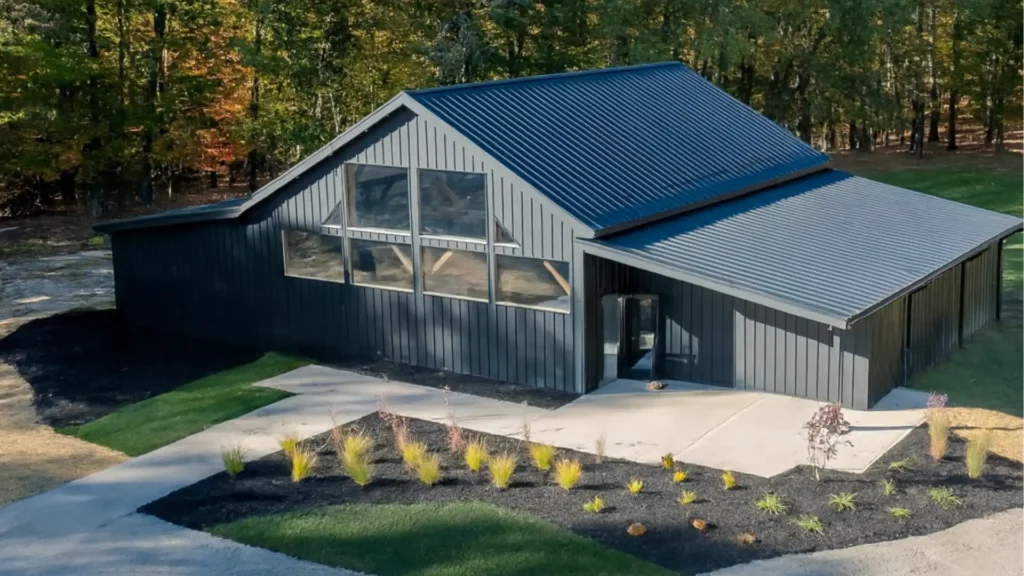
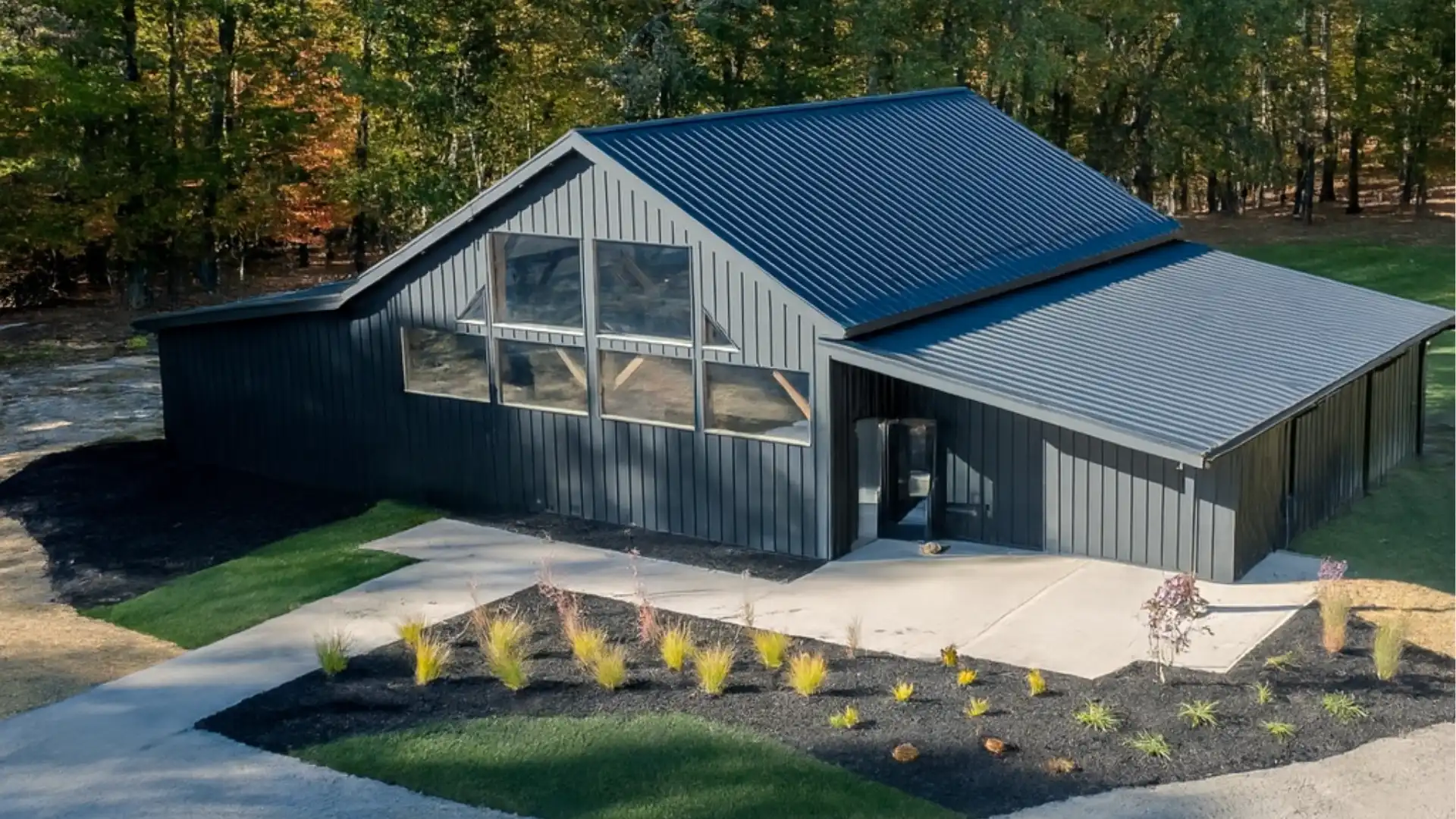
The Ceremony Barn is a dedicated indoor ceremony space within the Flower Farm complex on the South Side of the property. It seats up to 50 guests on 25 handcrafted live-edge benches, framed by floor-to-ceiling windows that bring the surrounding woodland in without sacrificing the comfort of a fully climate-controlled interior.
The design philosophy is one of subtraction: exposed timber-framed trusses, polished concrete floors, and walls of glass let the natural setting do the work. In spring, the flowering fields beyond the windows are in bloom. In winter, snow-covered grounds frame the ceremony in a way that no floral installation can replicate.
The Carriage House is steps away from the Ceremony Barn, a three-story dedicated getting-ready space with a private bridal suite featuring individual vanities and styling stations, a full kitchen, a raised outdoor deck overlooking the ravine, groom’s quarters with a full bar, lounge seating, and entertainment, and a complimentary honeymoon suite for Sunday weddings.
The Barrel Room — Intimate Groups Up to 150
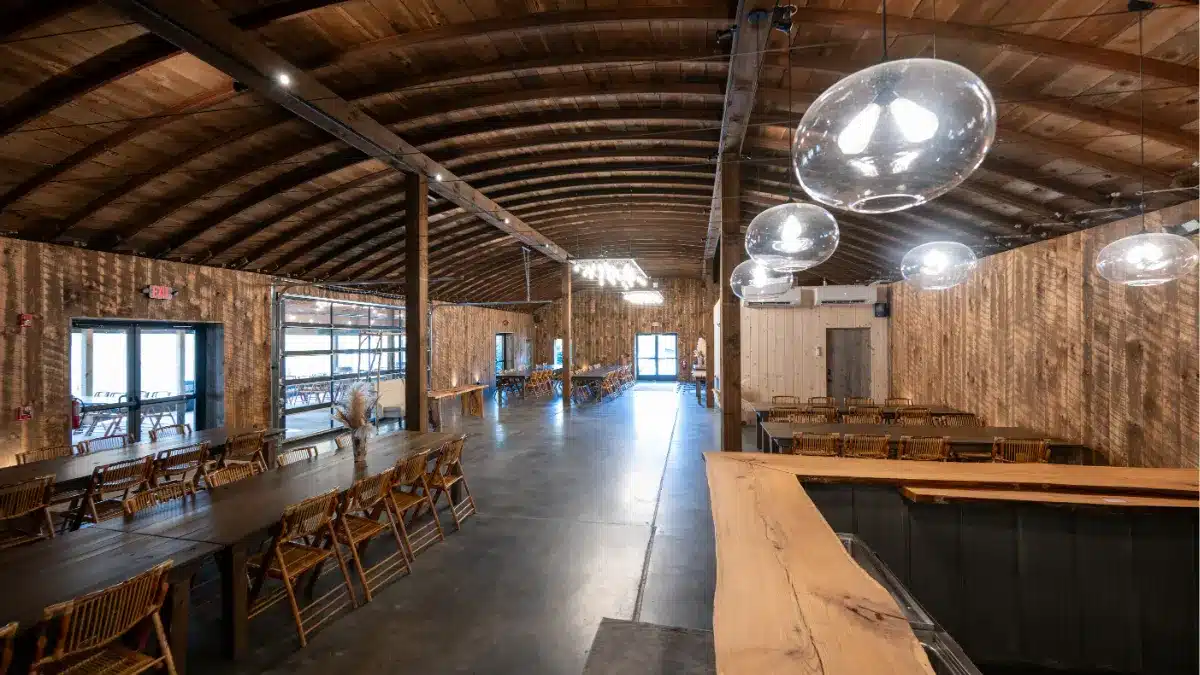
For micro weddings on the larger end of the guest count, or for couples who want maximum indoor-outdoor flexibility, The Barrel Room offers 4,000 square feet of event space with a dramatic open bowstring truss roof, a full-service bar, a private catering kitchen, and a 1,600-square-foot enclosed patio with wooded creek views. The space also houses the farm’s floriculture and honey production programs.
Ceremony options for Barrel Room bookings include the Lakeside Chapel, a serene outdoor structure on Chalet Lake that seats couples and their closest guests for a private lakeside ceremony before moving inside for the reception. Dedicated Bride’s Quarters and Groom’s Quarters, each 500 square feet with private decks, are on-site for the getting-ready portion of the day.
On-Site Lodging: The Detail That Changes Everything
Standing Rock Farms has 12 on-site lodging units, ranging from the Lakeside Chalet on Chalet Lake to the Woodside Cabins with private hot tubs and fire pits, to larger houses sleeping 6 to 8. Cabin blocking is available for micro wedding groups, allowing the couple and their guests to reserve multiple units together so no one has to leave the property after the celebration.
When your 15 closest people are staying on-site, the wedding weekend becomes a genuine experience rather than a single event. Friday night becomes an arrival dinner. Saturday is the wedding. Sunday morning is coffee on the cabin decks, a slow breakfast, the kind of unhurried time with the people you love that rarely happens in ordinary life. The celebration does not end because the bar closes. It ends naturally, the way good weekends do.
| Plan your micro wedding at Standing Rock Farms → |
What Does a Micro Wedding Day at Standing Rock Farms Actually Look Like?
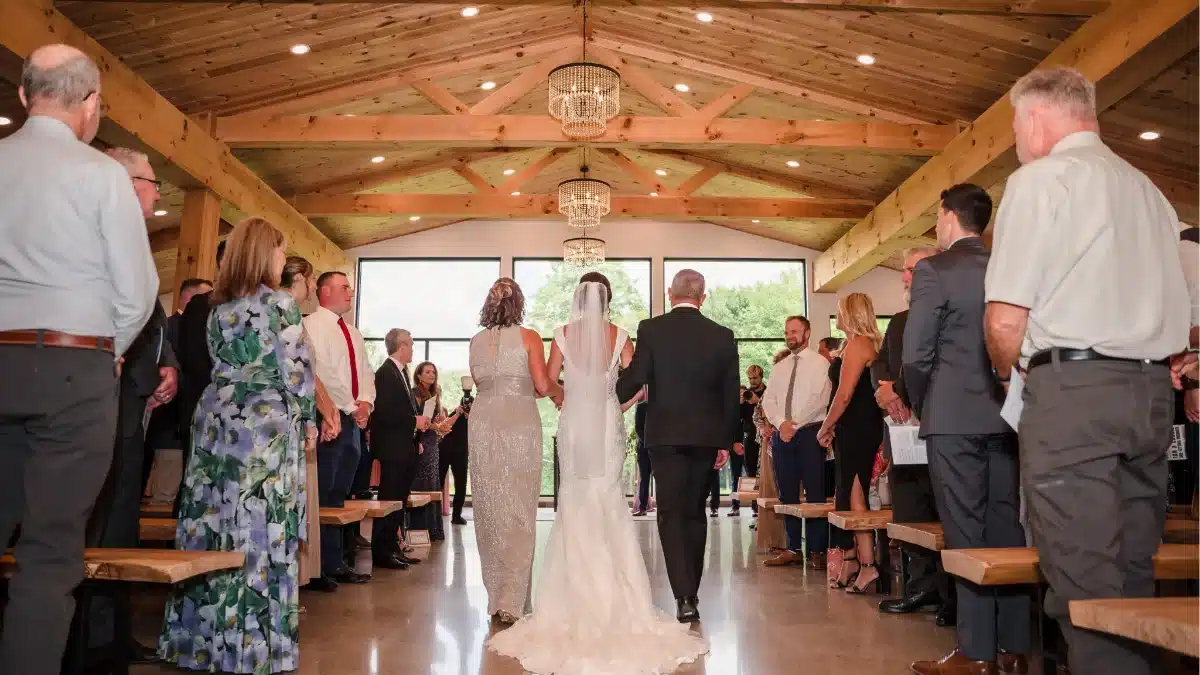
The best way to understand a micro wedding at SRF is to walk through a real one. Here is what a Saturday typically looks like for a couple with 22 guests booked at the 1837 Barn.
Friday
Guests arrive throughout the afternoon and check into their cabins and lodging units on the property. There is no formal schedule. People walk down to the lake. Someone finds the fire pit and starts it early. The couple and their immediate family have dinner together, relaxed and unhurried, the night before the wedding feels the way it should feel: calm.
Saturday Morning
The bridal party gathers in the getting-ready suite near the 1837 Barn. There is no crowding, no chaos, no hair and makeup happening in a hotel bathroom while someone’s mother stands in the doorway with her coat on. The space is designed for exactly this. The photographer arrives and starts capturing the morning, not the posed portrait version but the real one, the laughing, the nervous excitement, the quiet moments before everything begins.
The Ceremony
At two in the afternoon, 22 chairs are arranged beneath the outdoor arbor on the 1837 lawn. When the couple walks out, every single person in those chairs is someone who matters to them. There is no seat-filler in the crowd. The ceremony is quiet enough that the officiant speaks at a normal volume and everyone hears every word. There are tears in the third row and laughter from the front and a quality of attention that a 200-person ceremony simply cannot replicate.
Cocktail Hour and Portraits
Guests move to the lakeside patio. The couple slips away for portraits across the property. In 45 minutes, they cover the barn exterior, the flower fields, the lake edge, and the cattle pasture. The Highland cattle at Standing Rock Farms are genuinely curious animals. They approach the fence and look directly at the camera. In that moment, they become part of the story in a way that no venue stylist could have planned.
The Reception
Dinner inside the 1837 Barn. Long tables, warm light through the timber beams, family-style plates passing around a room where everyone knows everyone else. The toasts are longer than they should be and nobody minds. The couple eats their entire meal. They talk to every guest. They dance to three songs and then sit down and watch their parents dance, which is something you never get to see at a 200-person wedding because the timeline is too compressed and the room is too loud.
The Evening
Music ends at 10:30. The formal celebration concludes. And then most of the guests walk 200 feet to their cabins, change clothes, and find their way back to the fire pit, where the real part of the night begins. No one drove home. No one is checking their phone for an Uber. The people you love are right there, in the same place, and the night is yours.
How Much Does a Micro Wedding Cost?
Budget is the most common question couples have when they start researching micro wedding venues, and it is the question that gets the least honest answer online. Here is a realistic breakdown for a micro wedding at Standing Rock Farms with under 30 guests.
| Budget Category | Typical Range |
| Venue rental (1837 Barn or Barrel Room) | Typically $3,000–$8,500 depending on venue, day of week, and season |
| Catering (preferred partner list) | $75–$110 per person all-in, approximately $1,500–$3,300 for 20–30 guests |
| Bar service (in-house only at SRF) | Varies by package — confirm directly with SRF at inquiry |
| On-site lodging (per unit per night) | From $269 per night — multiple units for full wedding party |
| Photography (6–8 hours) | $1,800–$3,500 |
| Officiant (bring your own) | $300–$600 |
| Floristry (bring your own florist) | $800–$2,000 |
| Total realistic range | $12,000–$22,000 all-in for a full micro wedding weekend |
A micro wedding at Standing Rock Farms is not a budget option. It is a full luxury experience delivered at an intimate scale. The per-person spend is often similar to or slightly higher than a traditional wedding, but the total spend is significantly lower because you are not hosting 180 people. Couples consistently report spending less and remembering more, which is probably the most honest summary of what a micro wedding actually delivers.
The bigger financial consideration is not the venue cost but the lodging strategy. Booking on-site accommodations for the full party adds to the weekend cost, but it also fundamentally changes the quality of the experience. The couples who skip on-site lodging to save money consistently say in retrospect that it was the one decision they would change.
Common Micro Wedding Planning Mistakes (And How to Avoid Them)
Micro weddings require the same planning discipline as full-scale weddings, and they come with their own specific failure modes. Here are the five mistakes that come up most often.
Treating It Like a Small Wedding Instead of a Different Kind of Wedding
A micro wedding is not a traditional wedding with a shorter guest list. It is a structurally different event. The timeline is more compressed, the vendor coordination is more personal, and the emotional intensity is higher because there is nowhere for it to dissipate in a crowd. Couples who approach a micro wedding with the same planning assumptions as a 150-person event consistently underestimate what it takes to execute well.
Under-Booking On-Site Lodging
This is the mistake couples most frequently regret. The assumption is that 20 guests means 3 or 4 rooms. In practice, micro wedding guests stay longer, celebrate harder, and want the experience to continue. Book the property, not a hotel in town. At Standing Rock Farms, cabin blocking allows the couple to reserve multiple lodging units together as a group. The couples who do this report a fundamentally different wedding weekend than those who scatter their guests across nearby hotels.
Skipping the Day-Of Coordinator
‘It is a small wedding, we can manage it ourselves.’ This is the most common planning logic and the most reliably wrong one. Someone still has to cue the music, manage the caterer’s timeline, coordinate the photographer’s movements, and handle the moment when the florist is 20 minutes late and the ceremony starts in 40. At a micro wedding, there is no coordinator-in-training learning on the job. You need someone who has done it before, because when something goes sideways with 20 people watching, it is much more visible than it would be in a room of 200.
Reducing the Experience Along With the Guest Count
Some couples eliminate the bar, cut the caterer, skip professional photography, and choose minimal decor to manage costs. Then they spend the year after their wedding quietly wishing they had done it differently. A micro wedding should be small in headcount, not small in quality. The intimacy amplifies everything, which means the things you do invest in are experienced more fully by every person in the room. An exceptional dinner for 20 is remembered. A mediocre one is too.
Waiting Too Long to Book Peak Dates
The assumption that micro weddings are easier to schedule is partially true. There is more flexibility on Fridays, Sundays, and the winter months at Standing Rock Farms. But fall Saturdays in September and October fill 12 to 18 months out regardless of wedding size. The 1837 Barn and the Ceremony Barn compete for the same calendar as the Flower Farm. If your heart is set on a specific date in peak season, reach out earlier than you think you need to.
Frequently Asked Questions About Micro Wedding Venues
What counts as a micro wedding?
A micro wedding is any celebration with 50 guests or fewer. The true sweet spot where the format changes the feel of the day is between 15 and 30 guests, where the ceremony is intimate enough that every person hears every word and the reception is small enough that the couple actually gets to have a real conversation with everyone there.
Is 100 people a micro wedding?
No. One hundred guests is a standard small-to-mid-size traditional wedding. Micro is 50 and under, and most couples who deliberately choose the micro format are targeting well under that, typically 20 to 30 people. At 100 guests, the logistics and the feel of the day are closer to a traditional wedding than a micro one.
How many hours is a micro wedding?
The day itself typically runs 4 to 8 hours, depending on the schedule and the couple’s preferences. At Standing Rock Farms, the micro wedding model is designed around a full weekend rather than a single event: guests arrive Friday, the wedding happens Saturday, and the property and on-site lodging allow the celebration to extend naturally into Sunday morning.
What is a realistic budget for a micro wedding?
For a micro wedding with under 30 guests at Standing Rock Farms, couples typically spend between $12,000 and $22,000 for the full weekend, including venue rental, catering, bar service, on-site lodging, and photography. Venue rental alone typically runs $3,000 to $8,500 depending on the space, the day of the week, and the season. Pricing is not published on the website, so contact SRF directly for a current quote.
Can we stay on-site after our micro wedding at Standing Rock Farms?
Yes. Standing Rock Farms has 12 on-site lodging units, including private cabins with hot tubs and fire pits, a lakeside chalet, and larger houses sleeping 6 to 8. Cabin blocking is available for micro wedding groups, allowing the couple and their guests to reserve multiple units together. For lodging options and availability, visit the on-site lodging page at standingrockfarms.com.
Do micro weddings at Standing Rock Farms book as far in advance as regular weddings?
Peak fall dates, particularly Saturdays in September and October, fill 12 to 18 months out regardless of wedding size. There is more flexibility for Friday and Sunday dates and for the January through March window, which also offers the advantage of lower pricing and a genuinely beautiful winter setting in the climate-controlled barn spaces. If a specific date matters, reach out sooner than feels necessary.
| Check availability for your micro wedding date → |
The Right Setting Makes the Decision Easy
A micro wedding is not for everyone. It requires a certain willingness to disappoint people who expected an invitation, and a certain confidence that what you are choosing is better, not lesser, than what they might have expected.
But for the couples who make that choice deliberately, the setting matters more than it does at any other kind of wedding. When there are 20 people in the room, every detail is visible. Every backdrop shows up in the photos. Every ambient sound is part of the ceremony. The venue is not background. It is the story.
Standing Rock Farms was built for exactly this. The 450 acres, the working farm, the three lakes, the cattle, the flower fields, the restored barns, the 12 lodging units that let everyone stay through Sunday morning. It is a place designed to make a small celebration feel complete rather than incomplete. To make fewer guests feel like the right guests. To make a shorter guest list feel like the truest one.
Fall 2026 dates at the 1837 Barn and the Ceremony Barn are booking now. If the property feels right, reach out early.
| Book a property tour at Standing Rock Farms → |